Pou Whenua by Toi Awa o Tupoho, 2024
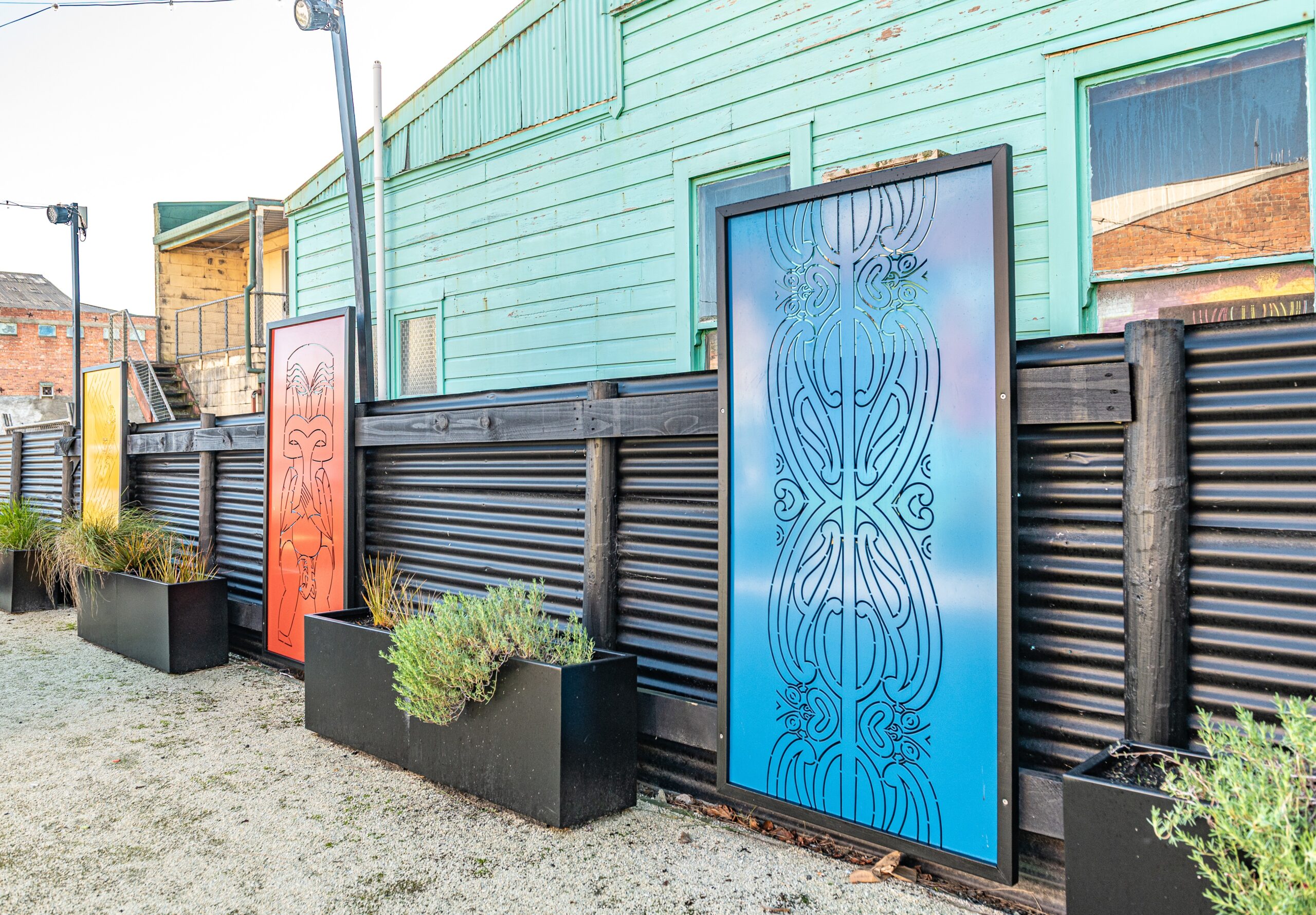
This trio of brightly coloured, steel pou whenua were created by a collective of artists named Toi Awa o Tupoho as part of the Streets for People project at Guyton Street in 2024. The individual pou whenua and artist descriptions are shared below in order from left to right.
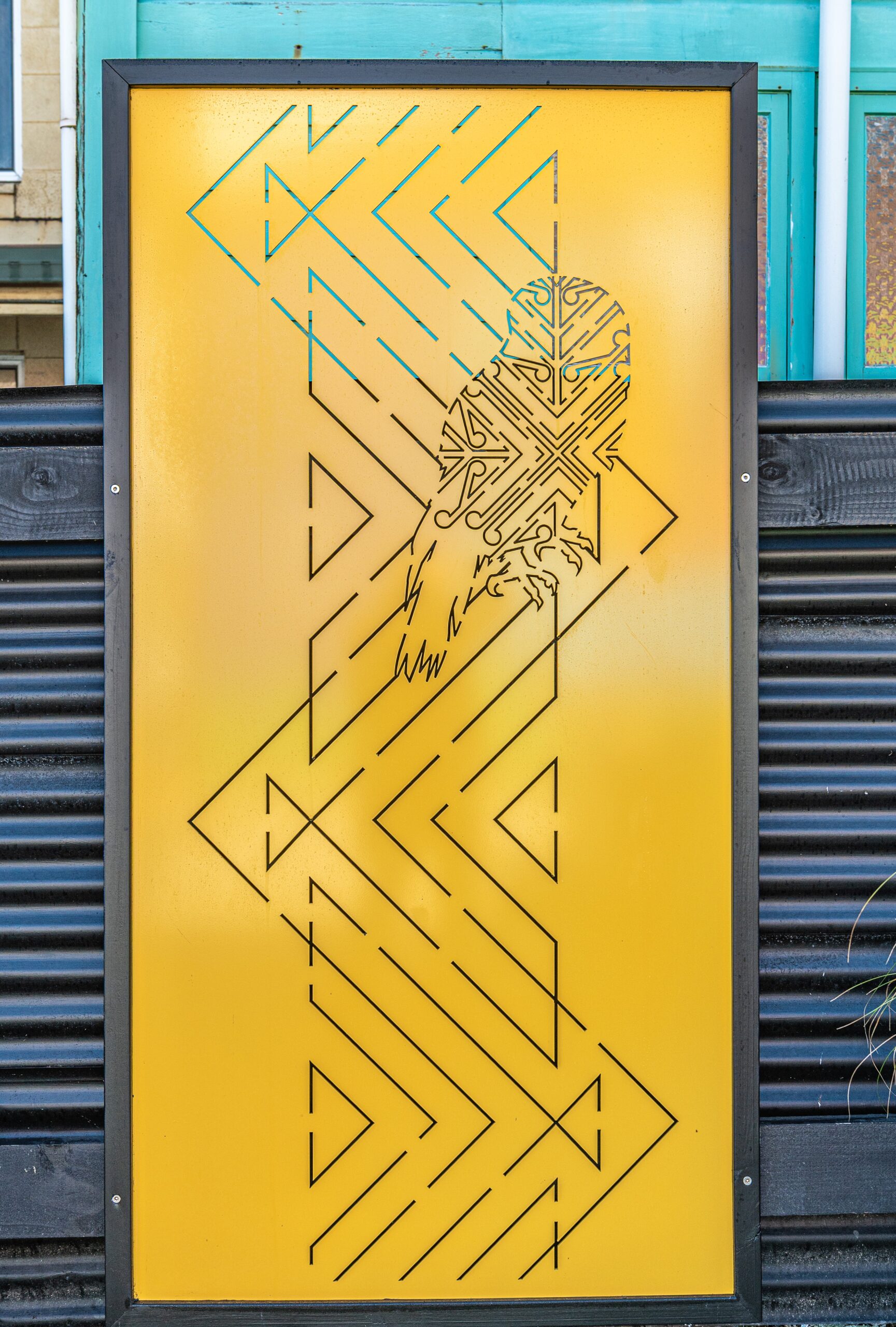
Te Ruru o Ruihana by Cecelia Kumeroa
The artist explains, “Te Ruru o Ruihana is dedicated to my mokopuna (granddaughter), Ruihana. This pou incorporates Ngāti Tumango mangopare designs within the ruru (Morepork) form, expressing resilience, tenacity, vigilance, and prowess. The background tāniko pattern acknowledges connections to Ngāti Pāmoana and Ngā Poutama weaving experts, tūpuna (ancestors) of Ruihana. The design is aligned with the tile work at Te Whare o Rehua Sarjeant Gallery and the road art of Drews Avenue. These woven histories embed tribal narratives across the landscape while honouring ancestral taonga, expertise, and legacy.”
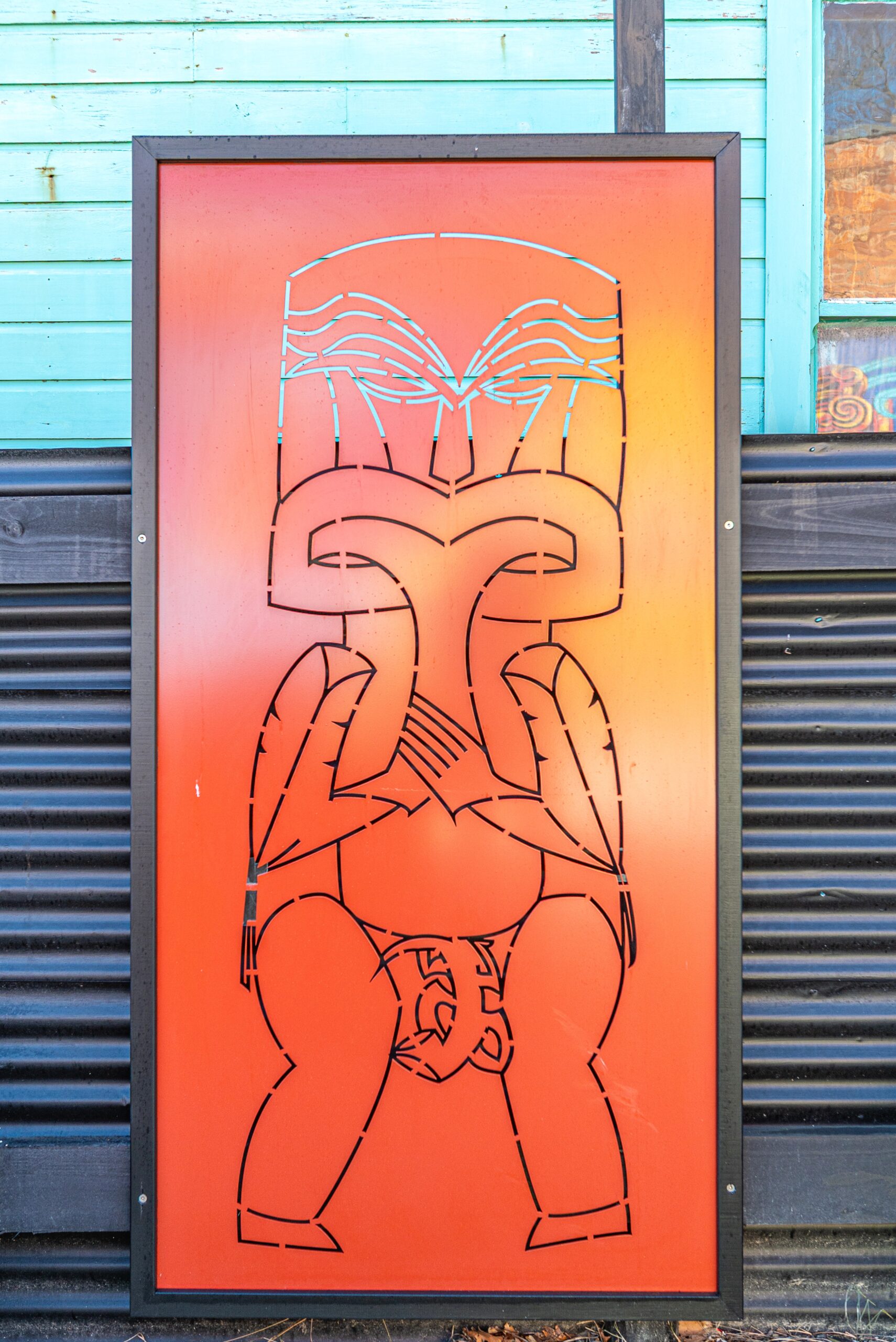
Tama Pou a Awa by Bill Ranginui
The artist explains, “This artwork is inspired by Poutama, our ancestral predecessor. Tama Pou, depicted as a superhero, is accompanied by his ever-watchful lizard companion, a constant presence and skilled shapeshifter. Tama Pou serves as the guardian (kaitiaki) of his people’s collective well-being, especially protecting the young, the elderly, the weak, and the vulnerable. He embodies protection, justice, love, and peace.
The design also pays homage to the playful tradition of karetao (puppetry), a central element of the whare tapere - the earliest form of Māori theatre. Karetao was often used to teach rangatahi (youth) about tribal history.”
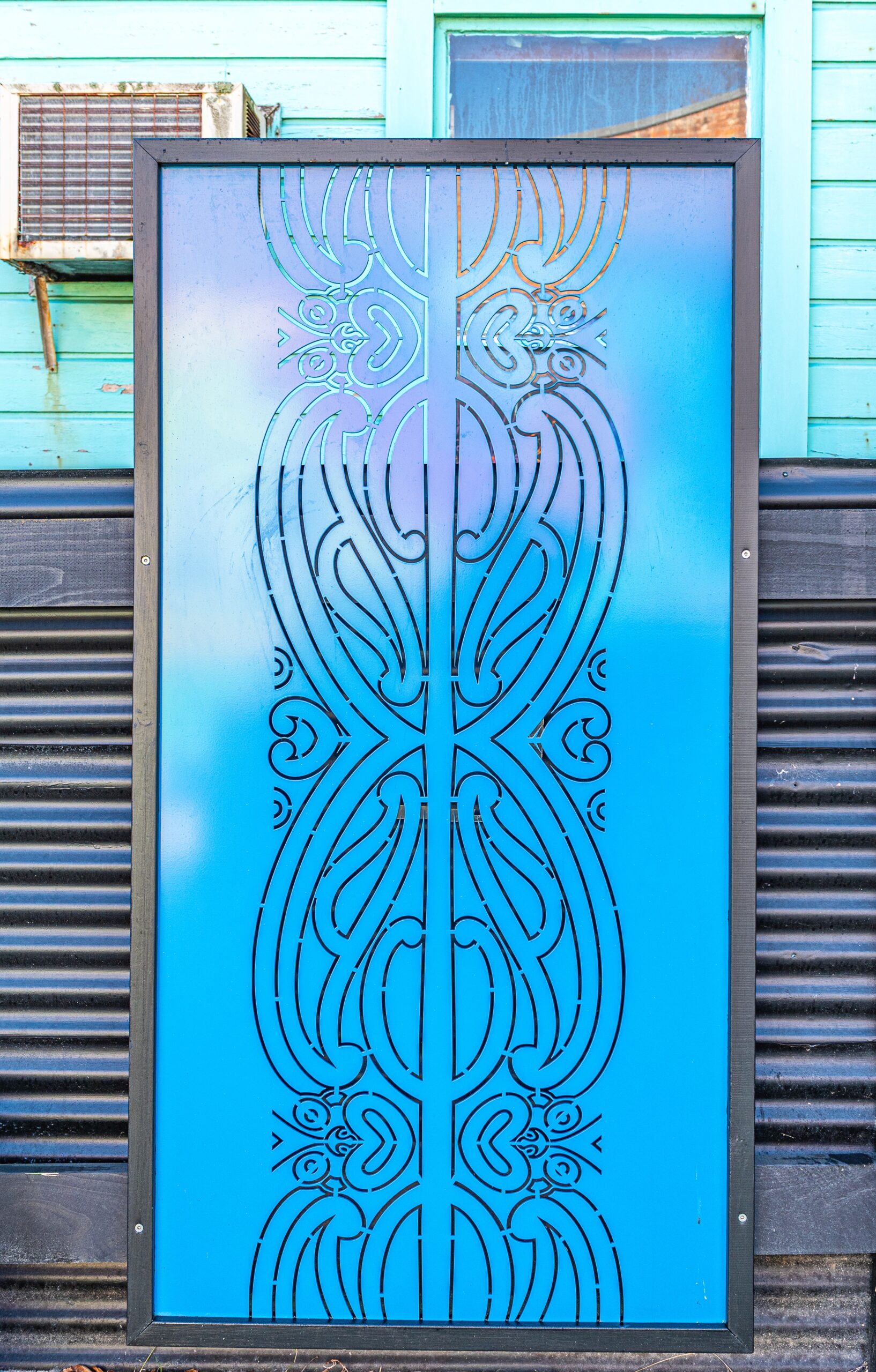
Pou by Ioane Wairua-Pohe Takiari
The artist introduces themselves and their artwork below.
“Ruapehu te Maunga
Whanganui/Waikato nga Awa
Te Ātihaunui a Pāpārangi/ Ngāti Maniapoto/ Ngāti Uekaha me Ngāti Haamoa nga iwi.
This artwork represents the past and present, with the top half representing our ancestors that have passed and the bottom half showing the continuation of their legacy and lineage.”
Photo by Mark Brimblecombe